
How does hydro jetting work? This professional drain and sewer cleaning service uses high-pressure water to remove buildup, debris, and clogs from plumbing lines. Instead of relying on harsh chemicals or pushing a small opening through a blockage, the process washes the inside of the pipe so water and waste can move through the line with less resistance.
For homeowners, landlords, property managers, and business owners in Gretna, Omaha, and nearby Nebraska communities, clogged drains can cause stress fast. A slow sink, backed-up floor drain, sewer odor, or recurring main line issue can point to grease, roots, sludge, or scale collecting inside the system.
JTM Plumbing helps local residential and commercial customers solve drain and sewer problems with honest service and professional plumbing solutions. When a line needs deep cleaning, hydro jetting may be the right option. It can restore flow, reduce repeat clogs, and support the long-term performance of sewer lines when handled by trained plumbers.
What Happens During Hydro Jetting
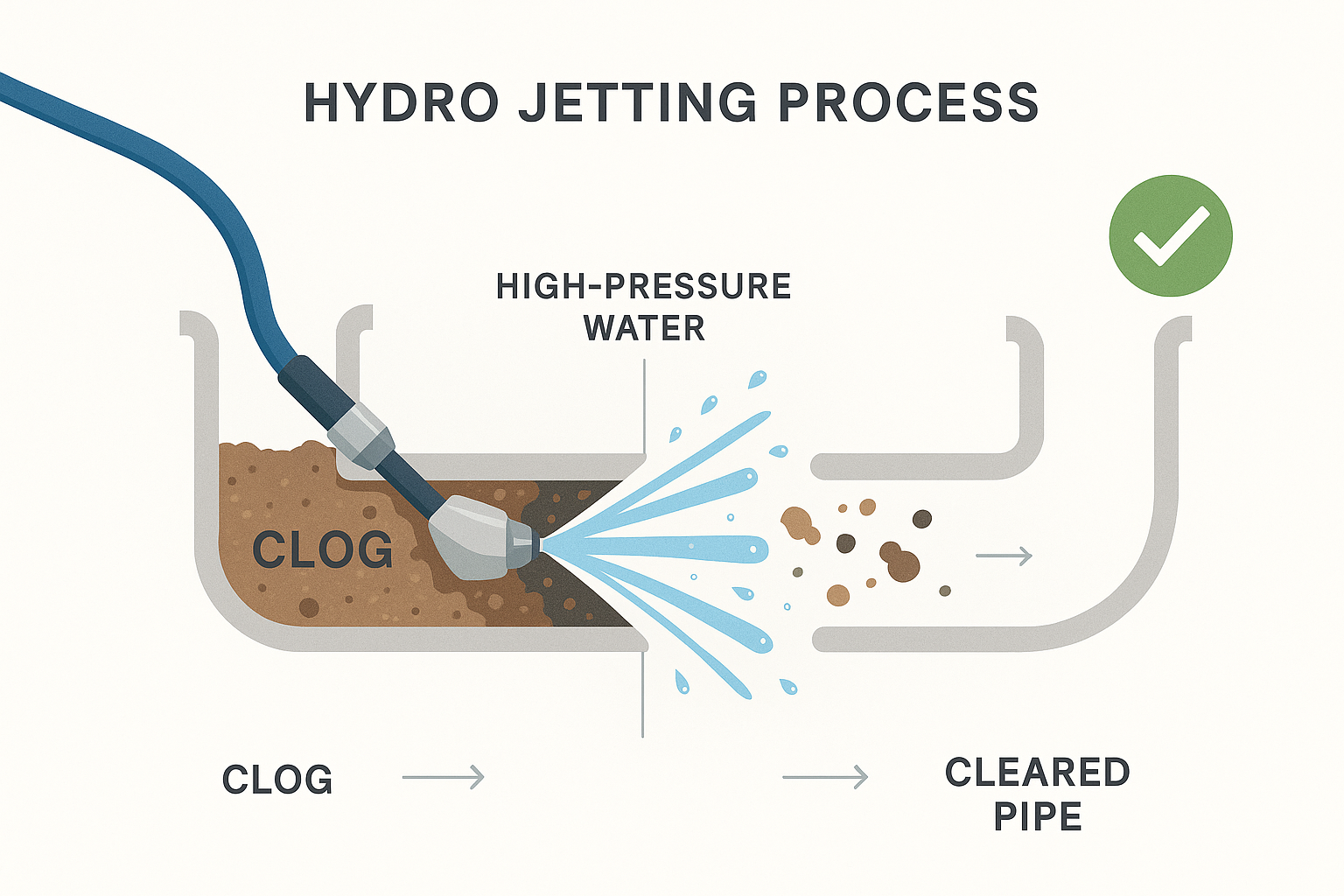
Hydro jetting is a sewer-cleaning method professional plumbers use to clear buildup from the inside of a sewer line or drain line. The plumber inserts a strong hose into the pipe through a cleanout or other approved access point. That hose connects to jetting equipment that generates water pressure and sends it through a specialized nozzle that guides the water in multiple directions.
The nozzle is one reason the process works so well. A forward-facing stream helps break into the clog. Rear-facing streams push debris backward through the line and help pull the hose forward. As the hose moves through the pipe, pressurized water scrubs the pipe walls and flushes loosened material away.
Hydro jetting is different from basic drain clearing because it cleans the line rather than only opening a path through the blockage. Grease, sludge, mineral scale, soap residue, and roots can cling to the inner surface of sewer pipes. If that material stays in place, another clog can form later. A proper hydro jet service helps remove the material that causes many repeat drain issues.
Before starting, a plumber should evaluate the plumbing system. In many cases, a camera inspection helps locate the blockage, identify the pipe material, and check whether the pipe is strong enough for high-pressure water jetting. This matters because older, damaged, collapsed, or badly corroded pipes may need repair instead of cleaning.
Hydro jetting is a professional service, not a DIY task. The equipment uses powerful pressure, and using it incorrectly can damage a pipe or create a safety hazard. JTM Plumbing's trained plumbers choose the right approach for the system, the clog, and the property.
How Water Jet Technology Cleans Sewer Lines
Water jet cleaning works through force, direction, and movement. The machine creates a controlled stream of water, the hose carries that water into the line, and the nozzle directs the spray where it needs to go. The result is a cleaning action that can scour heavy buildup without chemical drain cleaners.
A hydro jet can address many materials that collect in residential and commercial plumbing systems. Kitchen lines often gather grease and food waste. Bathroom drains can collect soap scum, hair, and organic matter. Main sewer lines may develop roots, sludge, silt, and mineral scale. Commercial properties may deal with larger volumes of waste, which can make scheduled sewer cleaning a smart maintenance step.
The length of the hose and the water pressure used will depend on the property and the line being cleaned. A small residential drain does not need the same setup as a long commercial sewer line. Professional plumbers adjust the equipment to match the job.
Common materials hydro jetting can remove include:
- Grease, fats, and oils inside kitchen drain lines
- Sludge, soap scum, and organic waste
- Sand, silt, and loose debris
- Mineral deposits and scale along pipe walls
- Small root growth in sewer lines
- Food particles and buildup from high-use drains
- Residue left behind by previous clogs
Because hydro jetting uses water, it avoids many problems linked to chemical cleaners. Chemicals may not reach the full clog, may sit inside the line, and may be hard on older plumbing. Jet cleaning relies on water and professional control, which makes it a strong option for many drain and sewer issues.
The goal is not only to clear the current blockage. The goal is to leave the sewer line cleaner so waste can pass through more smoothly. Cleaner pipe walls give grease and debris fewer places to catch, which may help reduce future clogs.
When Hydro Jetting Is the Right Choice
Hydro jetting is often recommended when drain problems come back after basic cleaning. A one-time slow drain may have a simple cause. Repeated backups, sewer odors, or several slow drains at once can point to a deeper problem in the system.
Homes with older plumbing can develop years of buildup along the pipe walls. Restaurants and commercial kitchens often deal with grease buildup that can narrow lines over time. Rental properties and multi-unit buildings may need dependable plumbing services because high use can strain the system. In each case, a professional hydro jet service may help restore flow and reduce emergency calls.
Signs your property may need hydro jetting include:
- Drains that stay slow after plunging or snaking
- Recurring clogs in the same drain
- Several fixtures draining slowly at the same time
- Gurgling sounds from toilets, tubs, sinks, or floor drains
- Sewer odors around drains or lower-level areas
- Water backing up into tubs, showers, or floor drains
- Frequent main line clogs
- Commercial drains slowing during busy hours
Hydro jetting can also be used as preventive maintenance. Property managers and business owners may schedule routine sewer cleaning to reduce the chance of sudden backups. This can be helpful for restaurants, offices, shops, apartment buildings, and other high-use properties.
Timing depends on the plumbing system, the age of the pipe, the type of property, and past drain history. Some properties may only need hydro jetting when a major issue appears. Others may benefit from planned maintenance on a regular schedule. JTM Plumbing can inspect the system and recommend a practical service plan based on what is happening inside the line.
Hydro Jetting vs. Snaking, Chemicals, and Other Drain Cleaning Methods
Not every clogged drain needs hydro jetting. Sometimes a plunger or drain snake is enough. The right method depends on the type of clog, where it is located, and whether buildup remains along the pipe walls.
Snaking is a common drain cleaning method. A plumber feeds a cable into the line to break through or pull back part of the blockage. Snaking can work well for hair clogs, soft blockages, and some localized drain problems. Its main limit is that it may only punch a hole through the clog. If grease or sludge remains on the pipe walls, the problem may return.
Chemical drain cleaners are another common option, but they come with concerns. Many products are harsh, may not work on roots or heavy buildup, and may damage older pipes when used repeatedly. They can also create safety risks if they splash, sit in standing water, or react with other products.
Hydro jetting is stronger because it cleans the pipe with water pressure. It can reach deeper buildup and wash debris through the sewer line. For stubborn clogs, recurring drain trouble, and commercial plumbing systems, that deeper cleaning can make a noticeable difference.
- Plunger
- How It Works: Uses suction and pressure near the fixture
- Best Use: Small sink, tub, or toilet clogs
- Limits: Does not reach deep line blockages
- Drain Snake
- How It Works: Uses a cable to break through or pull debris
- Best Use: Hair, soft clogs, simple blockages
- Limits: May leave buildup on pipe walls
- Chemical Cleaner
- How It Works: Uses chemicals to dissolve some material
- Best Use: Minor soft buildup in limited cases
- Limits: Can be harsh and may not remove roots or heavy grease
- Hydro Jetting
- How It Works: Uses pressurized water from a jetting machine
- Best Use: Grease, sludge, roots, recurring clogs, sewer cleaning
- Limits: Requires inspection and professional equipment
For many properties, these methods are not competing choices. They are tools used for different situations. A plumber may use snaking for one service call and hydro jetting for another. The value of working with a professional is getting the right method used for the actual problem.
JTM Plumbing looks at the symptoms, the pipe condition, and the likely cause before recommending service. That helps customers avoid short-term fixes when the line needs cleaning and avoid unnecessary jetting when a simpler repair will do.
What To Expect From JTM Plumbing
When you schedule hydro jetting or drain service with JTM Plumbing, the process begins with a clear look at the problem. The plumber may ask when the issue started, which fixtures are affected, whether backups have happened before, and whether the property has had sewer line trouble in the past.
From there, the team checks the drain or sewer line. If needed, camera equipment may be used to view the inside of the pipe. This helps identify roots, grease buildup, standing water, damage, or a blockage that needs attention. It also helps the plumber decide whether hydro jetting is safe for the pipe.
A typical service visit may include:
- Problem review: The plumber listens to the symptoms and checks the affected plumbing.
- Line inspection: The drain or sewer line is evaluated to locate the issue.
- Service recommendation: You receive a clear explanation of the best option.
- Equipment setup: The hose and nozzle are placed into the correct access point.
- Jet cleaning: Pressurized water breaks apart buildup and flushes debris through the line.
- Flow testing: The plumber checks whether the drain or sewer line is moving properly.
- Next-step advice: You get practical tips for reducing future clogs.
This approach gives homeowners and commercial customers a better understanding of the service. It also supports lead generation naturally because many readers who search for hydro jetting information are trying to decide whether they need help now.
JTM Plumbing serves Gretna, Omaha, Bellevue, La Vista, Papillion, Elkhorn, Springfield, and nearby Nebraska communities. The company works with residential and commercial customers who need drain cleaning, sewer cleaning, repair, installation, and general plumbing services.
For property managers and landlords, documentation and clear communication can make maintenance easier. For homeowners, it helps to know what caused the issue and what can be done to prevent another backup. For business owners, fast response and reliable service can reduce downtime and protect daily operations.
Schedule Hydro Jet Service With JTM Plumbing
A slow drain may look minor at first, but recurring clogs often mean buildup is growing inside the system. Hydro jetting is one of the strongest options for cleaning sewer lines when grease, sludge, roots, or debris keep blocking the flow.
JTM Plumbing provides professional drain, sewer, and plumbing service for homes and businesses across the Omaha metro area. If you are dealing with repeated backups, sewer smells, slow-moving drains, or a main line that keeps clogging, the team can inspect the problem and explain whether hydro jetting is the right fit.
You do not have to wait for a full backup to call. Early service can help reduce the risk of water damage, messy cleanup, and added repair costs. It can also give you a clearer picture of the condition of your pipe before a small problem turns into a larger one.
Call JTM Plumbing to schedule service in Gretna, Omaha, or a nearby Nebraska community. You will get straightforward communication, professional workmanship, and help from a local team that understands residential and commercial plumbing systems in the area.
Is hydro jetting something I can do myself?
No. Hydro jetting is a professional service, not a DIY task. The equipment uses powerful pressure, and using it incorrectly can damage a pipe or create a safety hazard. A trained plumber matches the pressure and nozzle to the system, the clog, and the property.
Does hydro jetting use chemicals?
No. The process relies on water and professional control instead of chemical drain cleaners. Chemicals may not reach the full clog, can sit inside the line, and can be hard on older plumbing.
Do I need a camera inspection before hydro jetting?
In many cases, yes. A camera inspection helps locate the blockage, identify the pipe material, and check whether the pipe is strong enough for high-pressure water jetting. Older, damaged, collapsed, or badly corroded pipes may need repair instead of cleaning.
How is hydro jetting different from snaking?
A drain snake feeds a cable into the line to break through or pull back part of the blockage, which may only punch a hole through the clog. Hydro jetting cleans the pipe wall itself, so grease and sludge are washed away rather than left behind to form the next clog.
Can hydro jetting be used as preventive maintenance?
Yes. Property managers and business owners may schedule routine sewer cleaning to reduce the chance of sudden backups. This can be helpful for restaurants, offices, shops, apartment buildings, and other high-use properties.


.svg)
.webp)