


What pipes can be hydro jetted? In many cases, modern sewer and drain pipes can be cleaned with hydro jetting when they are in stable condition and properly inspected first. PVC, ABS, many cast iron lines, and some commercial sewers may be good candidates. The real answer depends on pipe material, age, condition, clog type, and whether the line has cracks, corrosion, offsets, or past repair issues.
Hydro jetting uses high-pressure water to remove grease, sludge, roots, debris, and buildup from inside plumbing lines. Instead of only punching a small opening through a clog, a hydro jet can wash the inner pipe walls so waste and water can move with less resistance.
For homeowners, landlords, property managers, and business owners in Gretna, Omaha, and nearby Nebraska communities, pipe safety matters just as much as drain cleaning power. JTM Plumbing helps customers choose the right service by checking the plumbing system, looking for signs of damage, and recommending hydro jetting only when the pipe can handle the process.
Pipes That Can Often Be Hydro Jetted
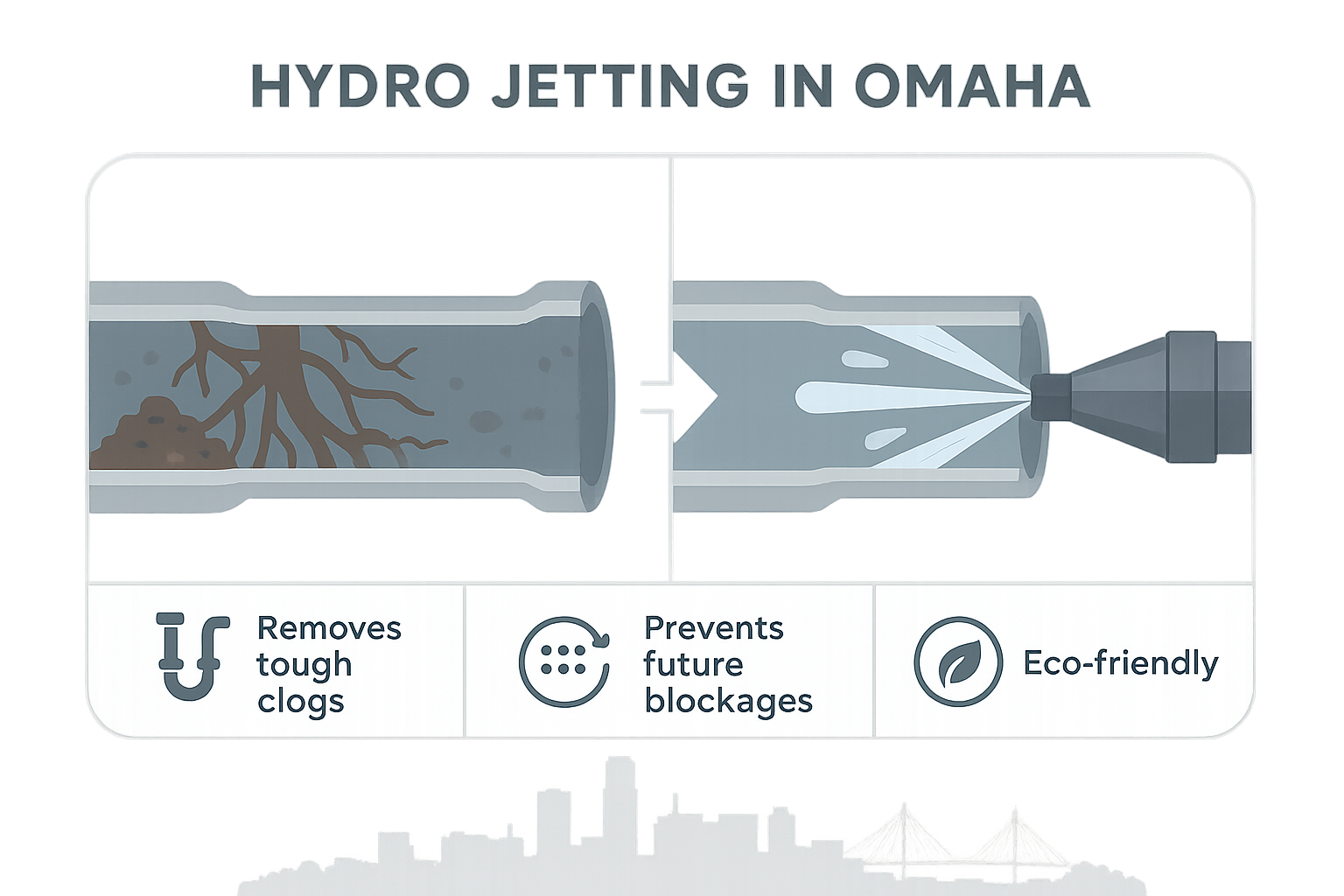
Hydro jetting is commonly used for drain pipes, sewer pipes, and main sewer lines that are structurally sound. The process works by sending water through a hose and specialized nozzle connected to a jetting machine. The pressure is adjusted based on the pipe, the clog, and the service goal.
Many modern residential and commercial plumbing systems can be cleaned this way. The method is often used for kitchen drain lines, bathroom drain lines, floor drains, commercial kitchen lines, and sewer line cleaning. It may also be used for municipal pipes and commercial sewers when the line size, access point, and pipe condition support the work.
Common pipe types that may be hydro jetted include:
- PVC pipes: Often suitable when properly installed and not cracked, crushed, or separated.
- ABS pipes: Often suitable in many drain and sewer applications when the line is in good shape.
- Cast iron pipes: May be suitable when the iron is stable, not heavily corroded, and inspected first.
- Clay sewer lines: Sometimes possible, but extra caution is needed because older clay can crack or shift.
- Commercial drain lines: Often suitable when access and pipe condition allow safe cleaning.
- Main sewer lines: Often suitable when no collapse, major offset, or severe damage is present.
Hydro jetting is safe for many systems when the work is performed by a professional who understands water pressure, nozzle selection, pipe material, and drain layout. It is not safe to assume every pipe can take the same pressure. A plumber must match the cleaning method to the line.
For example, a newer PVC sewer line with grease buildup may be a strong candidate. An old cast iron line with corrosion, thin walls, and root intrusion may need a slower assessment before any cleaning begins. If damage is found, sewer line repair may be the better first step.
JTM Plumbing evaluates each situation before recommending hydro jetting. That helps customers avoid unnecessary risk while still getting a strong cleaning option for stubborn clogs.
Why Pipe Inspection Comes Before Hydro Cleaning
A pipe inspection helps determine whether hydro jetting is the right service. Without seeing the condition of the line, a plumber may not know whether the pipe has damage, heavy roots, separated joints, corrosion, or a collapsed section. High-pressure water is powerful, so inspection helps prevent turning a cleaning appointment into a repair problem.
Camera inspection is often used before jetting sewer lines. A small camera is sent into the line to show what is happening inside the pipe. The plumber can look for buildup, roots, cracks, standing water, offsets, low spots, and other concerns. This step also helps locate the blockage and decide which nozzle and pressure setting should be used.
A professional inspection can help answer questions such as:
- Is the line blocked by grease, sludge, roots, debris, or scale?
- Is the pipe cracked, collapsed, offset, or corroded?
- Is hydro jetting a good fit, or would snaking be safer?
- Does the pipe need repair before cleaning?
- Are there multiple clogs or one main blockage?
- Is the line suitable for routine sewer cleaning?
Pipe condition can vary throughout the same plumbing system. A home may have newer drain pipes inside and older sewer pipes outside. A commercial property may have a mix of materials due to past renovations. This is why a visual check matters.
JTM Plumbing uses inspection and service experience to make practical recommendations. If hydro jetting is a safe option, the team can move forward with the right equipment. If the line shows damage, customers receive clear advice about repair options or other cleaning methods.
Older Pipes, Cast Iron, and Lines That Need Extra Care
Older plumbing systems need careful handling. Hydro jetting may still be possible, but only after the pipe has been checked. Age alone does not always rule out hydro jetting. The concern is whether the pipe can handle the water pressure without further damage.
Cast iron pipes are common in many older homes and buildings. Strong cast iron can often be cleaned, but iron can corrode from the inside over time. When corrosion becomes severe, the pipe walls may thin, roughen, or flake. In that condition, aggressive cleaning could worsen existing weakness.
Clay pipes also need caution. Older clay sewer lines may have cracks, root intrusion, separated joints, or shifting caused by soil movement. A hydro jet can help clear roots and debris in some cases, but a damaged clay line may need repair.
Some pipes should not be hydro jetted until a plumber reviews them closely. These may include lines with:
- Known cracks or breaks
- Severe corrosion or thin walls
- Collapsed or crushed sections
- Major offsets or separated joints
- Recent poor-quality repair work
- Heavy root intrusion with structural damage
- Repeated backups caused by a damaged line rather than buildup
If the issue is only buildup, cleaning may solve the problem. If the issue is a broken pipe, cleaning will not fix the structure. In those cases, JTM Plumbing may recommend pipe repair or replacement before hydro jetting.
For homeowners and property managers, this honest assessment can prevent wasted money. It also helps protect the plumbing investment. The goal is not to use the strongest machine every time. The goal is to restore flow without creating avoidable damage.
What Hydro Jetting Can Remove From Drain and Sewer Pipes
Hydro jetting is often recommended when a line needs a deeper cleaning than snaking can provide. A drain snake can break through some clogs, but it may leave buildup stuck to the pipe walls. Hydro jetting uses water pressure to clean a larger portion of the pipe interior.
This makes it useful for recurring clogs and slow drains caused by material that has been collecting over time. Kitchen drains are common examples because grease and food particles can stick to the line. Commercial kitchens, restaurants, rental buildings, and high-use properties often deal with faster buildup than a single-family home.
Hydro jetting can help remove:
- Grease, fats, and oils
- Food debris and sludge
- Soap scum and organic buildup
- Sand, silt, and loose debris
- Mineral scale in some lines
- Small roots and root masses
- Waste buildup inside sewer lines
- Blockages that keep returning after snaking
The cleaning action can improve flow and reduce the chance of another clog forming soon after service. When pipe walls are cleaner, grease and debris have fewer places to grab. This is one reason many commercial properties use hydro jetting as part of a maintenance plan.
Hydro jetting may also help before certain repair or inspection work. A cleaner line gives the plumber a better view of the pipe interior. Once sludge and debris are removed, hidden cracks, offsets, roots, or low spots may become easier to identify.
JTM Plumbing provides drain cleaning and sewer cleaning services for residential and commercial customers in the Omaha metro area. The team can explain whether hydro jetting is the right match for the clog, the pipe material, and the condition of the system.
Hydro Jetting vs. Snaking for Plumbing Lines
Hydro jetting and snaking both have a place in drain cleaning. The best choice depends on what is causing the clog and how much buildup is inside the pipe.
Snaking uses a flexible cable to break through or pull back a blockage. It can be a good option for simple clogs, hair, soft obstructions, or minor drain issues. Snaking may be faster and less involved for certain jobs.
Hydro jetting uses high-pressure water to wash the line. It is often a better fit for grease, sludge, roots, and buildup along pipe walls. It may also be a better choice when clogs keep returning after snaking.
- Plunger
- How It Works: Uses suction and pressure near the fixture
- Best Use: Small sink, tub, or toilet clogs
- Limits: Does not reach deep line blockages
- Drain Snake
- How It Works: Uses a cable to break through or pull debris
- Best Use: Hair, soft clogs, simple blockages
- Limits: May leave buildup on pipe walls
- Chemical Cleaner
- How It Works: Uses chemicals to dissolve some material
- Best Use: Minor soft buildup in limited cases
- Limits: Can be harsh and may not remove roots or heavy grease
- Hydro Jetting
- How It Works: Uses pressurized water from a jetting machine
- Best Use: Grease, sludge, roots, recurring clogs, sewer cleaning
- Limits: Requires inspection and professional equipment
For a single bathroom sink clog, snaking may be enough. For a main sewer line with years of buildup, hydro jetting may provide better results. For damaged pipes, neither method may be the right long-term solution until repair needs are addressed.
Chemical cleaners should be used with caution. They may not clear deep clogs, and repeated use can be hard on older plumbing. They can also create safety concerns for plumbers if chemicals remain in the line during service.
JTM Plumbing helps customers choose the right method rather than guessing. That matters for both homes and businesses because the wrong approach can waste time, leave the clog behind, or risk damage.
When Hydro Jetting May Not Be the Right Service
Hydro jetting is powerful, but it is not the answer for every pipe or every clog. Some plumbing problems need repair instead of cleaning. Other issues may be better handled with snaking, fixture repair, or a different drain service.
A pipe that is collapsed, badly cracked, or heavily offset cannot be cleaned back into proper shape. If wastewater cannot move because the pipe structure has failed, the line may need repair or replacement. Hydro jetting might remove debris, but it will not correct a broken section.
There are also cases where hydro jetting needs to be delayed until more information is available. If the pipe material is unknown, the age of the system is unclear, or the line has a history of repairs, inspection should come first.
JTM Plumbing may recommend another option when:
- The pipe is too damaged for safe high-pressure cleaning.
- The line has collapsed or separated.
- A repair is needed before cleaning will help.
- The clog is close to the fixture and can be removed with a simpler method.
- The plumbing layout requires another access plan.
- The pipe condition cannot be confirmed without inspection.
This is where working with a local professional protects your budget. A homeowner may see only a slow drain. A trained plumber can check whether the issue is buildup, roots, broken pipe, or a larger sewer problem.
Commercial properties also benefit from this approach. A business cannot afford repeated downtime, sewage odors, or emergency backups. Correct diagnosis helps keep the property running and reduces repeat service calls.
Schedule Pipe Inspection and Hydro Jetting With JTM Plumbing
If you are dealing with slow drains, repeat clogs, sewer odors, or backups, hydro jetting may be the right way to clean the line. The safest first step is to have the pipe inspected so a professional can confirm whether the system can handle the service.
JTM Plumbing provides plumbing, drain, sewer, cleaning, repair, and installation services for homes and businesses in Gretna, Omaha, Bellevue, La Vista, Papillion, Elkhorn, Springfield, and nearby Nebraska communities. The team understands local plumbing systems and helps customers make informed decisions without pressure.
Call JTM Plumbing if you notice:
- Slow drains in several areas of the property
- A main line clog that keeps coming back
- Sewer smells from drains or lower levels
- Water backing up into tubs, showers, or floor drains
- Frequent drain cleaning needs
- Grease buildup in a kitchen or commercial line
- Concerns about old cast iron or aging sewer pipes
A plumber can inspect the line, explain the pipe condition, and recommend hydro jetting when it is a safe fit. If repair is needed, you will get clear options before the work moves forward.
Clear pipes support better flow, fewer interruptions, and a healthier plumbing system. Schedule service with JTM Plumbing for honest guidance and professional hydro jetting in the Omaha metro area.
Can cast iron pipes be hydro jetted?
Often yes, when the iron is stable, not heavily corroded, and inspected first. Cast iron can corrode from the inside over time, and once the walls thin, roughen, or flake, aggressive cleaning could worsen the existing weakness.
Is hydro jetting safe for clay sewer lines?
Sometimes, but extra caution is needed. Older clay lines may have cracks, root intrusion, separated joints, or shifting caused by soil movement. Jetting can clear roots and debris in some cases, but a damaged clay line may need repair instead.
Why does a camera inspection come first?
Without seeing inside the line, a plumber cannot know whether the pipe has damage, heavy roots, separated joints, corrosion, or a collapsed section. The inspection also helps locate the blockage and decide which nozzle and pressure setting to use.
When is hydro jetting the wrong service?
When the pipe is collapsed, badly cracked, or heavily offset, cleaning will not correct a failed structure. Jetting may also be the wrong call when the clog is close to the fixture and a simpler method will remove it, or when the pipe condition cannot be confirmed.
What can hydro jetting actually remove?
Grease, fats and oils, food debris, sludge, soap scum, sand and silt, mineral scale in some lines, small roots and root masses, and waste buildup inside sewer lines. It is also effective on blockages that keep returning after snaking.


.svg)
.webp)