
Knowing when to replace a water heater can help you avoid cold showers, water leaks, rising utility bills, and unexpected plumbing damage. Many homeowners wait until the tank fails, but a planned replacement often costs less than an emergency call after water has spread across a basement, utility room, or closet.
For many standard tank water heaters, the average heater lifespan is about ten years. Some units last longer with steady maintenance, while others fail sooner because of hard water, heavy use, poor installation, or skipped service. A tankless water heater can last longer, but it still needs regular care to perform well.
JTM Plumbing helps homeowners, landlords, and property managers in Gretna, Omaha, and nearby Nebraska communities make informed choices about hot water systems. If your water heater is nearing its expected age, showing signs of damage, or costing too much to repair, the team can inspect it and explain whether repair or replacement is the better value.
Heater Lifespan and Replacement Timing
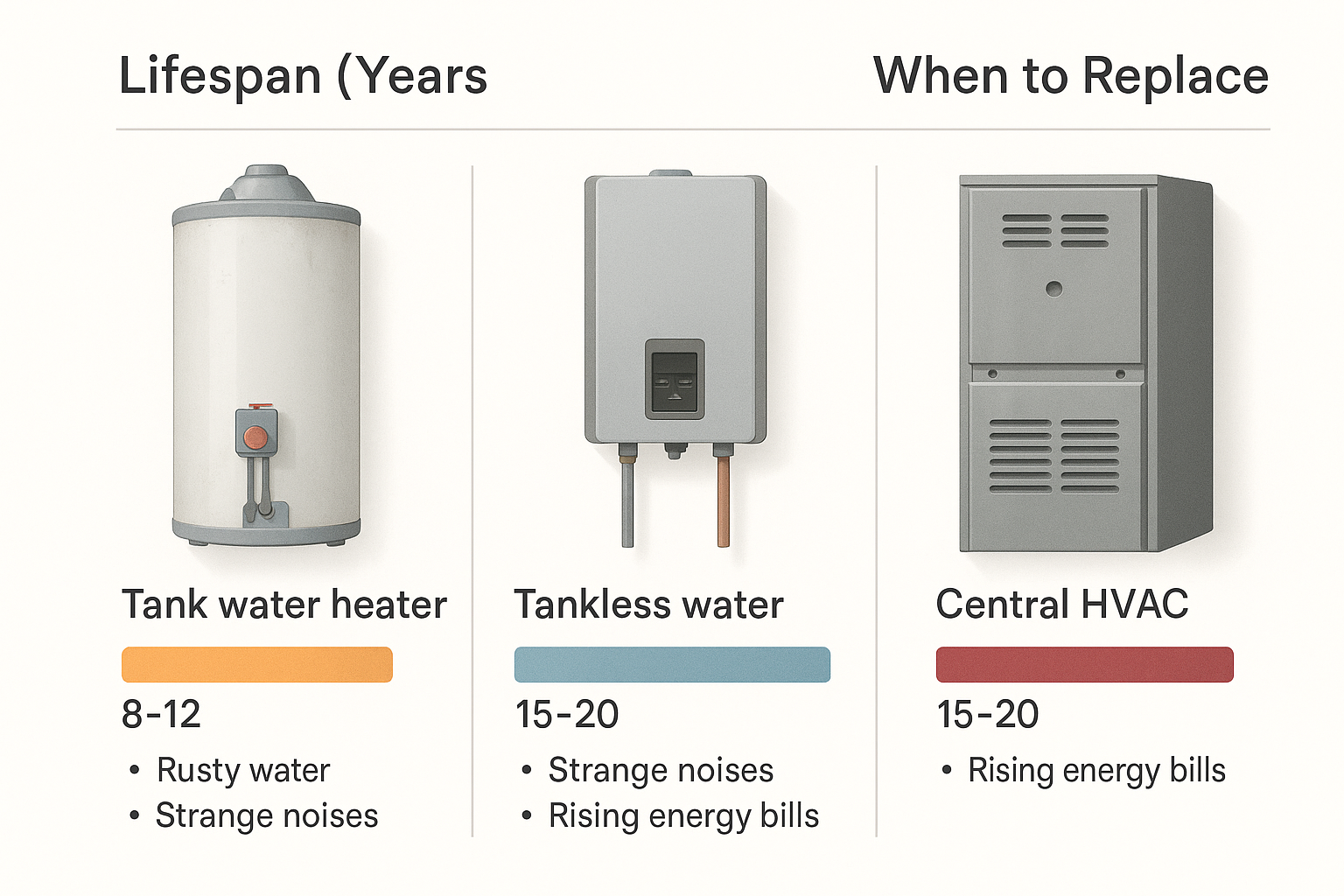
A traditional tank water heater often lasts 8 to 12 years. Gas and electric models can both fall within this range, though performance depends on water quality, usage, installation quality, and maintenance. If your unit is about ten years old and showing problems, replacement should be part of the conversation.
Tankless water heaters may last 15 to 20 years when they are maintained well. These systems do not store a full tank of hot water, which can reduce some tank-related wear. Still, mineral scale, hard water, neglected filters, and poor venting can shorten their useful life. In our metro, hard water is common enough that a water softener can meaningfully extend the life of either system.
Age alone does not always mean you must replace the unit right away. A well-maintained system that still provides steady hot water, shows no leaks, and has reasonable energy use may have time left. On the other hand, a failed water heater at 8 years old may make replacement water equipment the smarter option if the tank is leaking or repairs are becoming frequent.
- Standard tank, gas
- Typical Lifespan: 8 to 12 years
- Replacement Clues: Rust, leaks, poor heating, pilot or burner issues
- Maintenance That Helps: Flush tank, check venting, inspect anode rod
- Standard tank, electric
- Typical Lifespan: 8 to 12 years
- Replacement Clues: Lukewarm water, failed elements, leaks, high bills
- Maintenance That Helps: Flush tank, test elements, inspect wiring safely
- Tankless water heater
- Typical Lifespan: 15 to 20 years
- Replacement Clues: Low flow, error codes, scale buildup, temperature changes
- Maintenance That Helps: Descale unit, clean filters, service yearly
- Hybrid or heat pump unit
- Typical Lifespan: 10 to 15 years
- Replacement Clues: Lower efficiency, odd noises, inconsistent heating
- Maintenance That Helps: Clean filters, keep airflow clear, annual inspection
Water heaters work hard every day. Showers, laundry, dishwashing, cleaning, and tenant use all place demand on the system. In homes with larger families or rental properties with steady use, the tank may wear faster than a lightly used unit.
If you're asking whether to replace now or wait, start with age, performance, repair history, and safety. JTM Plumbing can check the system, look for signs of wear, and help you decide before a small issue turns into a larger plumbing problem.
Common Problems That Point to Replace
Some water heater issues can be repaired. Others are signs that replacement is the better long-term choice. The challenge is knowing which problems are minor and which ones signal that the unit is reaching its life expectancy.
A lack of hot water is one of the most noticeable problems. If the water turns cold quickly or never gets hot enough, the heating element, thermostat, burner, dip tube, or sediment buildup could be involved. On a newer unit, a water heater repair may solve the issue. On an older unit, poor heating may be one more sign of decline.
Strange sounds are another warning. Popping, rumbling, banging, or crackling noises often come from sediment inside the tank. As sediment hardens, the heater has to work harder to warm the water. That strain can lead to higher energy use, poor performance, and tank damage over time.
Common problems that may mean it is time to replace include:
- Inconsistent hot water that runs out faster than it used to
- Rumbling or popping noises from sediment inside the tank
- Rust-colored water coming from hot water taps
- Frequent repairs within a short period
- Higher energy bills without a clear change in use
- Water leaks near the base of the tank
- Visible corrosion on fittings, valves, or the tank exterior
- A unit past about ten years with ongoing performance issues
If your system has one small issue and is still under the heater warranty, repair may make sense. If the unit is old, inefficient, leaking, and needing repeated service, replacement is often the safer and more cost-effective path.
For landlords and property managers, waiting too long can create tenant complaints, emergency access problems, and property damage. A planned replacement can be scheduled at a better time and may reduce the chance of an emergency no-hot-water call.
Water Leaks, Rust, and Plumbing Damage
Water leaks should never be ignored. A small drip can become a tank failure, and a leaking tank can release enough water to damage flooring, drywall, trim, stored belongings, and nearby plumbing connections.
Leaks can come from several areas. A loose connection, failed valve, or leaking fitting may be repairable. A leak from the tank itself is different. Once the inner tank begins leaking due to corrosion, the unit usually needs replacement. Tank leaks do not heal, and patching is not a dependable option. If you are not sure where the water is coming from, our leak detection service can pinpoint it.
Rust is another concern. Rust on the outside of the tank, around the bottom seam, or near fittings can signal moisture problems or corrosion. Rusty hot water can point to corrosion inside the tank or issues with the anode rod. A plumber can help determine whether the source is the heater or another part of the plumbing system.
Moisture near the base of the tank can also create safety risks. Water near electrical components is dangerous. Gas units with poor venting, burner problems, or corrosion need prompt professional attention. If you smell gas, leave the area and contact the gas provider or emergency services before calling for repair.
In Omaha and Gretna homes, basements and utility areas often contain finished surfaces, storage, or mechanical equipment. A leaking unit can damage more than the heater itself. Early inspection gives you time to plan repair or replacement before water spreads.
JTM Plumbing can check the source of the leak, inspect valves and connections, and explain whether the problem is repairable. If replacement is needed, the team can help you choose a properly sized unit and handle installation so your hot water is restored safely.
Repair Costs and Replacement Decisions
The choice between repair and replacement often comes down to age, cost, reliability, and risk. A low-cost repair on a newer water heater may be worthwhile. A costly repair on an older system may only delay replacement for a short time.
Start by looking at the repair estimate. If repairs are becoming frequent or the current repair is expensive, compare that cost to the price of replacement. A new system may offer better efficiency, stronger performance, and fewer service calls.
You should also think about the type of problem. Replacing a thermostat, heating element, or valve may be reasonable on a younger unit. Replacing parts on a tank that is rusting, leaking, or past its typical lifespan may not be a good investment.
A water heater is nearing replacement age when repair calls become a pattern. One repair may not be a big concern. Two or three repairs in a short period suggest the unit is becoming less dependable.
Consider replacement when:
- The tank is leaking from the body of the unit.
- The heater is around ten years old and losing performance.
- Repair costs are high compared with replacement.
- Hot water supply no longer meets household or tenant needs.
- Energy bills are rising because the unit runs longer.
- Rust, corrosion, or damage is visible.
- You want to avoid an emergency failure.
Sizing matters as well. A unit that is too small will struggle to keep up. A unit that is too large may waste energy. Changes in household size, added bathrooms, finished basements, or rental use can affect what size and type of heater makes sense. Our guide on what size water heater you need walks through the math.
JTM Plumbing can assess your current setup, review your hot water needs, and explain options for gas, electric, tank, and tankless replacement. The goal is to help you choose a reliable unit that fits your property, usage, and budget.
Heater Warranty, Maintenance, and Energy Efficiency
Before approving major repairs or replacement, check the heater warranty. Warranty coverage may help with parts, tank failure, or certain manufacturer defects. Coverage depends on the brand, age, registration status, installation details, and maintenance history.
Keep your model number, serial number, installation date, and proof of service in one place. This makes it easier to verify coverage. Some warranties require approved parts or professional installation, so it is wise to ask before work begins.
Maintenance can also affect how long water heaters last. Flushing a tank helps remove sediment. Checking the anode rod can help reduce corrosion inside the tank. Tankless systems need descaling, especially in areas with hard water. Routine service can improve heating performance and may extend the useful life of the system.
Good maintenance habits include:
- Schedule yearly water heater maintenance.
- Flush tank units to reduce sediment buildup.
- Ask about anode rod inspection for tank systems.
- Descale tankless systems as recommended.
- Watch for rust, moisture, noise, and temperature changes.
- Keep the area around the unit clear.
- Save warranty and service records.
Energy efficiency is another reason to consider replacement. Older water heaters can lose efficiency as sediment collects and parts wear down. If your unit takes longer to heat, runs often, or cannot keep up with normal hot water needs, it may be using more gas or electricity than it should.
Newer models are designed for better performance and may reduce utility waste. For some homes, a tankless or high-efficiency system may be worth considering. For others, a standard tank replacement may be the most practical option.
JTM Plumbing can explain the pros and cons of different replacement options without pushing a one-size-fits-all answer. The right unit depends on your household, property layout, fuel type, budget, and long-term plans.
Schedule Water Heater Service With JTM Plumbing
A failing water heater can disrupt your day quickly. Cold showers, leaking tanks, rusty water, and rising energy bills are all signs that your system needs attention. Getting help early allows you to compare repair and replacement options before the unit fails.
Call JTM Plumbing if your unit is old, leaking, noisy, inefficient, or no longer providing steady hot water. A licensed local technician can inspect the system, review your heater warranty when available, explain repair costs, and help you decide whether replacing the unit is the better move.
Reliable hot water is part of a safe, comfortable property. Schedule water heater service with JTM Plumbing today and get practical guidance from a local plumbing team that understands Omaha-area homes and businesses.
How long does a water heater usually last? A standard tank unit typically lasts 8 to 12 years. A tankless system can run 15 to 20 years with regular descaling and service. Hard water, heavy use, and skipped maintenance all shorten those ranges.
Can a leaking water heater be repaired? It depends on where the leak is. A loose connection, failed valve, or leaking fitting is often repairable. A leak from the tank body itself means the inner tank has corroded, and that unit needs replacement.
Is it worth repairing a 10 year old water heater? Usually only if the repair is minor and the unit is otherwise performing well. If repairs are becoming a pattern, or the repair cost is a large share of a replacement, replacing is generally the better value.
Why is my hot water rust colored? That often points to corrosion inside the tank or a spent anode rod, though it can also come from elsewhere in the plumbing. A plumber can isolate whether the heater or the supply piping is the source.
Should I replace with the same size unit? Not automatically. Added bathrooms, a finished basement, a change in household size, or rental use can all change what size makes sense. Undersized units struggle to keep up and oversized units waste energy.


.svg)
.webp)